
Flat Roof Maintenance for GTA Homes and Small Buildings
Seasonal care, inspections, and simple repairs for Vaughan and nearby GTA buildings.
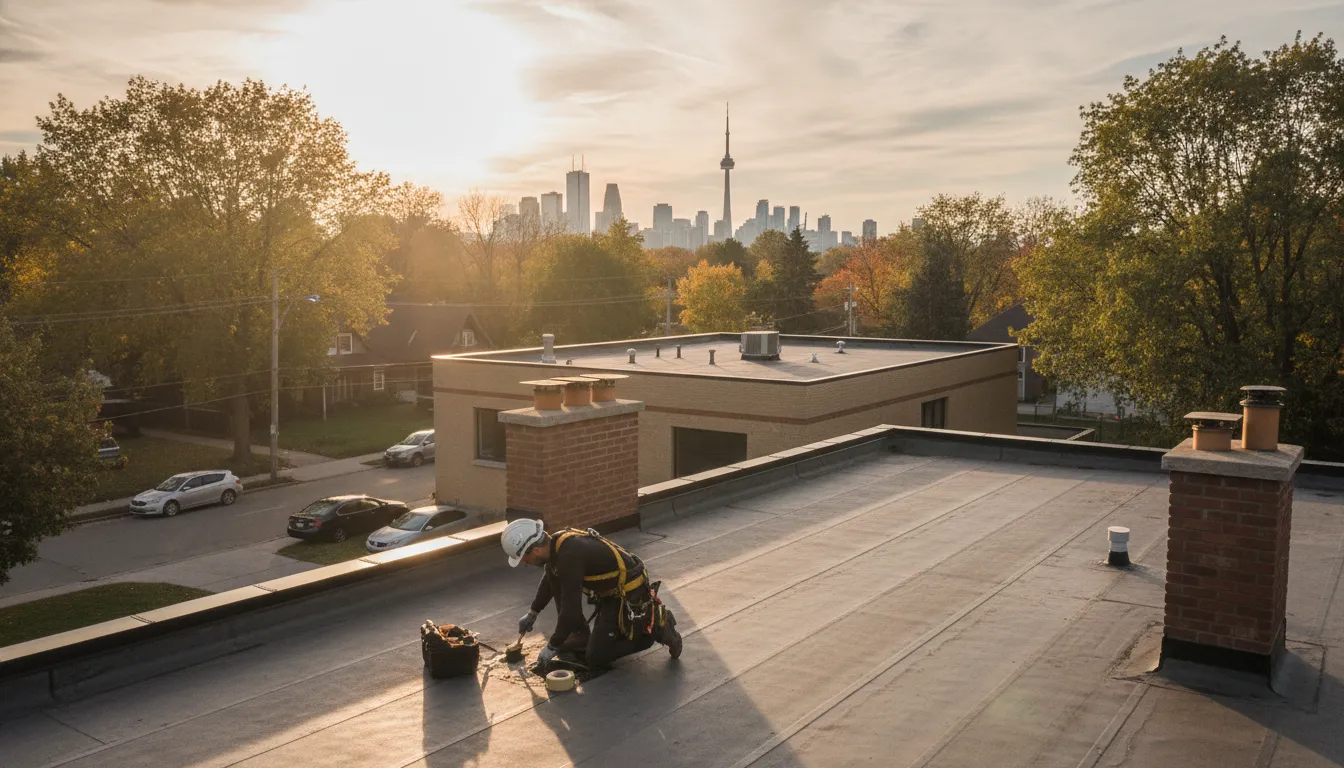
What is the minimum maintenance a GTA homeowner should do for a flat roof?
At minimum, inspect flat roofs twice a year and after major storms, clear drains and debris, check flashings and seams for separation, and arrange professional repairs for persistent leaks—do these and you’ll prevent most avoidable water damage.
Understand what a flat roof is
“Flat” roofs are not perfectly level; they have a slight slope to drain water. Common low-slope systems on homes and small buildings include modified bitumen, EPDM (rubber), TPO, and built-up roofing (BUR). Each material behaves differently—EPDM resists UV and punctures differently than TPO—so basic upkeep varies by product.
Why twice-yearly inspections matter
Inspecting in spring and late fall catches winter freeze-thaw damage, ice-dam issues, and summer membrane shrinkage. Vaughan and the surrounding Regional Municipality of York experience freeze-thaw cycles that stress seams and flashings: regular checks catch small problems before they cause interior damage.
Key parts to check
Look at drains and scuppers, membrane seams, roof-to-wall flashings, rooftop equipment seals, and ponding areas. Standing water accelerates membrane wear and leads to leaks; even short-term ponding after rain is a red flag requiring attention.
Record keeping and photos
Keep dated photos and notes after each inspection and any repair receipts. Good documentation helps with maintenance planning, contractor quoting, and insurance discussions—confirm local insurer requirements separately, as Ontario policies and claims processes can vary.
Step-by-Step: Flat Roof Maintenance for GTA Homes and Small Buildings
A straightforward seasonal routine keeps small flat roofs functioning. Follow these steps to inspect, maintain, and arrange repairs safely and efficiently.
- 1
1. Safety and access setup
Before any rooftop work, plan safe access and fall protection. Use a stable ladder, have a helper on the ground, and avoid going up in high winds or icy conditions; hire a pro if you need harnesses or roof-edge protection.
- 2
2. Clear debris and drains
Remove leaves, branches, and accumulated gravel by hand or with a soft broom; clean scuppers, gutters and internal drains so water flows freely. Clogged drains are the most common cause of ponding and accelerated membrane failure.
- 3
3. Inspect the membrane and seams
Walk the roof and look for blisters, cracks, seam separation, or exposed ply layers. For rubber EPDM, check for seam adhesive gaps; for torch-down bitumen look for loose edges; for TPO inspect heat-welded seams.
- 4
4. Check flashings and penetrations
Examine roof-to-wall flashings, skylight curbs, vents, and HVAC seals for gaps or old caulking. Reseal small gaps with a compatible roofing sealant; replace any metal flashing that is corroded or bent away from the wall.
- 5
5. Address minor repairs promptly
Patch small punctures or seam failures using manufacturer-recommended patch kits or compatible membranes. Small adhesive or patch repairs are affordable but must be done correctly to prevent water undercutting the membrane.
- 6
6. Schedule professional evaluation for complex issues
If you find extensive ponding, multiple seam failures, large blisters, or recurring leaks, book a professional inspection. A qualified roofer can test for moisture in the deck and recommend repair vs. replacement, and provide a written scope for insurance or permit needs.
Mistakes to Avoid
Certain common shortcuts and assumptions lead to the bulk of expensive flat-roof failures. Avoid these mistakes to extend service life and reduce unexpected costs.
Skipping seasonal checks
Only looking at your roof when there’s a leak lets small problems grow. Seasonal inspections—spring to clear winter debris and fall before freeze—catch issues early and are especially important in the Vaughan area given its winter conditions.
Using incompatible patch materials
Applying the wrong sealant or patch material can make problems worse by inhibiting adhesion or accelerating deterioration. Match repairs to the membrane type (EPDM to EPDM-compatible adhesives; TPO-compatible materials for TPO), or ask the manufacturer’s guidance.
Neglecting drains and pitched areas
Assuming a flat roof is fine because it 'looks level' ignores the reality of ponding water. Even small low spots trap water and speed membrane breakdown; ensure drains are sized and located correctly and add tapered insulation if ponding is persistent.
Hiring only on price
Choosing the cheapest contractor without asking for references, proof of insurance, or local experience often leads to poor repairs and callbacks. In Vaughan or neighbouring Markham and Richmond Hill, pick a contractor experienced with local codes, seasons, and the material your roof uses.
What Affects Your Outcome
These factors change repair urgency, cost, and longevity.
Roofing material type
Different membranes age and repair differently—EPDM patches and TPO heat-welds require different techniques and costs.
Age and condition of the roof
Older roofs are more likely to hide wet insulation or deck rot; a 10–15 year-old membrane is a different repair prospect than a 3-year system.
Quality of documentation
Photographs, inspection notes, and receipts help contractors and insurers understand history and scope; good records speed approvals.
Local climate and seasons
Freeze-thaw cycles, heavy spring rains, and summer UV affect membranes; Vaughan and the York Region climate demand winterized detailing and spring checks.
Permit and code requirements
Municipal requirements in Vaughan and York Region can affect replacement methods or inspections—confirm with the local building office before major work.
Contractor experience and warranties
A roofer’s skill, local references, and material warranties affect outcomes; ask about workmanship guarantees and how long the company has served Vaughan and nearby communities.
Frequently Asked Questions
How often should I have a professional inspect my flat roof?
Have a professional inspection every two to three years for a routine check, and sooner if you notice leaks, persistent ponding, or after severe storms. For roofs over occupied space or with aging membranes, annual inspections are wise.
Can I patch a flat roof myself?
You can do small, straightforward patches (puncture or small seam gaps) if you match materials and follow safety measures. For anything involving structural concerns, extensive ponding, or insulation saturation, hire a qualified roofer.
Does insurance usually cover flat roof repairs in Ontario?
Coverage depends on your policy and cause of damage: sudden events like storm damage may be covered, while wear-and-tear or lack of maintenance typically is not. Always verify specifics with your insurer and document damage; Ontario claim processes and timelines vary by company and policy.
What are signs the roof needs replacement, not repair?
Repeated leaks in different locations, large areas of wet insulation, multiple seam failures, or an older membrane near its expected service life indicate replacement is likely. A moisture scan by a professional confirms if the deck or insulation is saturated.
How do I prevent ice dams and winter damage on a flat roof?
Ensure proper roof insulation and ventilation to reduce heat loss that causes freeze-thaw and ice buildup; keep drains clear and consider heated drain covers if icing is frequent. For Vaughan-area homes, check drains in late fall and again after major snow events.
When do I need a permit for flat roof work in Vaughan?
Minor repairs generally don’t require a permit, but roof replacements, structural changes, or work affecting fire separations often do. Check with the City of Vaughan building department and confirm local rules because permit practices and thresholds differ across York Region.
Free flat-roof inspection for Vaughan-area homes
Schedule a no-cost assessment to identify leaks, ponding, and low-cost maintenance steps—helpful if you’re planning repairs or an insurance claim.
Get a Free Quote