
Metal vs Asphalt Roofing for Ontario Homes: An Honest Comparison
Clear, practical comparison to help Vaughan-area homeowners choose the right roof.
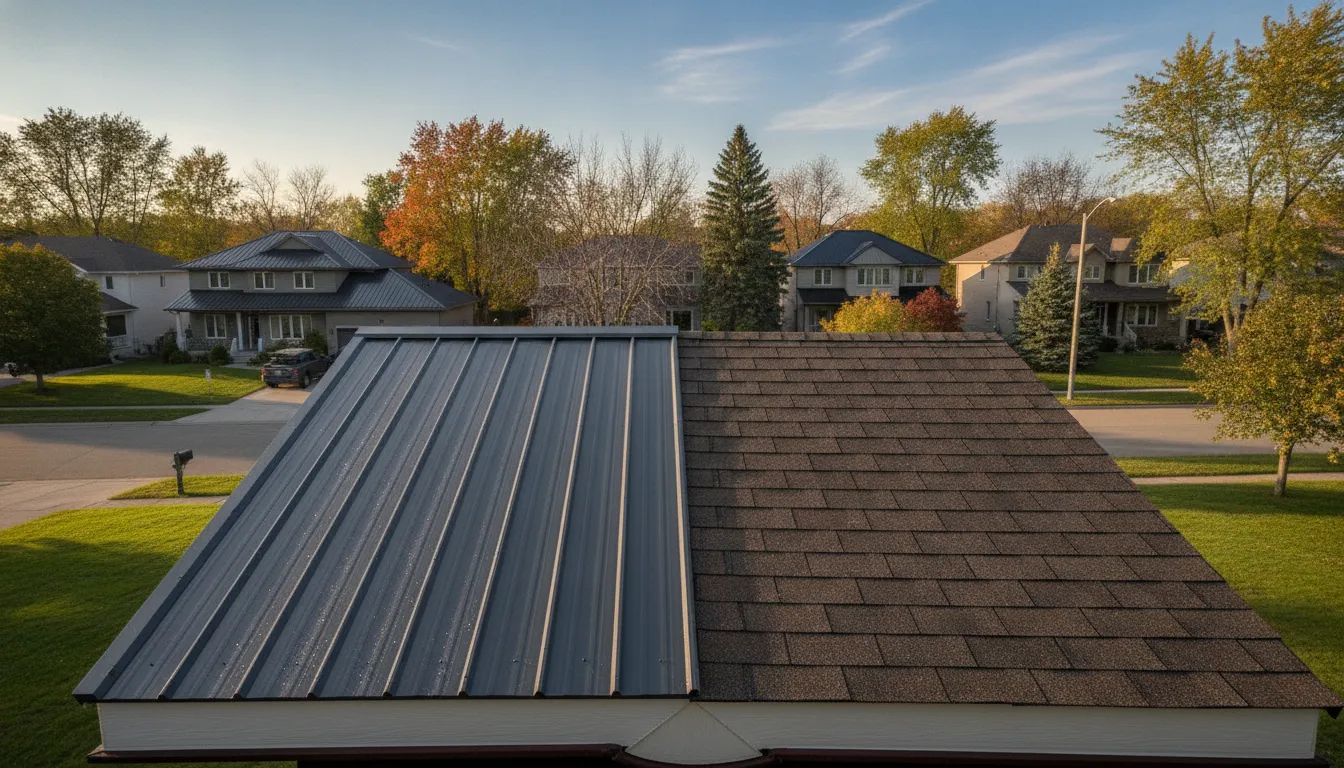
Which roofing material is best for Ontario homes: metal or asphalt?
There is no one-size-fits-all winner — metal usually lasts longer and resists ice and wind better, while asphalt is cheaper up front and easier to match visually; the right choice depends on your budget, roof slope, local climate exposure and long-term plans.
What each material is
Asphalt shingles are layered, granular-coated composite sheets (fiberglass or organic mats with mineral granules). Metal roofing is made from steel, aluminum, or occasionally zinc or copper, formed into panels or shingles and often factory-coated for corrosion resistance.
Lifespan and durability expectations
Typical architectural asphalt shingles in Ontario last roughly 15–30 years depending on product quality, ventilation and snowfall. Metal roofs commonly last 40–70 years when properly installed and maintained, holding up better to freeze–thaw cycles and wind uplift.
Typical upfront cost considerations
Asphalt is the lowest-cost roofing material to install per square — often the most economical for replacement. Metal has a higher initial material and labour cost but can deliver lifetime value through longevity, lower maintenance and potential energy savings.
Appearance and resale impact
Asphalt shingles come in many colours and familiar residential styles; they are easy to match and repair. Metal offers sleek modern or historically styled looks (standing seam, stamped shingles) and can increase curb appeal, especially on visible roofs in Vaughan, York Region, or nearby Richmond Hill and Markham.
Step-by-Step: Metal vs Asphalt Roofing for Ontario Homes: An Honest Comparison
A practical process to evaluate and choose between metal and asphalt roofing for your Vaughan-area home. Follow these steps to gather facts, compare costs and make a compliant decision.
- 1
1. Inspect the existing roof and structure
Document condition: missing shingles, roof deck sag, rot around chimneys and flashings. Take photos and note slope, valleys and attic ventilation — structural repairs or re-decking will affect both options and costs.
- 2
2. Consider climate exposure and orientation
Note wind-exposed ridges and north-facing slopes that get ice buildup during Vaughan's winters. Metal performs better on problematic slopes and where ice damming is common; asphalt may require upgraded underlayment or ice-and-water shield in valleys and eaves.
- 3
3. Get three detailed estimates
Ask each contractor for line-item quotes: materials (including underlayment, flashings, fasteners), labour, disposal, decking repair and permit fees. Verify warranty terms for labour and materials and confirm that crews are experienced with the chosen material.
- 4
4. Check permits, bylaws and insurer guidance
Confirm with your local Vaughan building department whether a permit or inspections are required for full replacement; bylaws on metal roof colour or visible fasteners can vary. If insurance is involved, notify your insurer early and verify what documentation they expect — policies and claims practices differ; always verify locally.
- 5
5. Review ventilation, insulation and ice-mitigation
Good attic ventilation and insulation reduce ice dams and extend shingle life. For metal roofs, ensure clip and fastener details allow thermal movement; for asphalt, specify ice-and-water shield and proper eave flashings.
- 6
6. Schedule and supervise installation
Plan work for milder weather when possible and confirm staging and waste removal. During the job, inspect underlayment, flashing details, and final fastener placement; ask the crew about warranty paperwork and maintenance tips before final payment.
Mistakes to Avoid
Choosing or installing the wrong system can cost far more than the material difference. These are common, often costly mistakes homeowners make — and practical ways to avoid them.
Skipping a full deck inspection
Assuming the decking is sound can lead to surprises once the old roof is stripped. Always include a deck inspection and budget for re-decking if there is rot, uneven boards or previous repairs — both metal and asphalt installations rely on a flat, secure substrate.
Buying the cheapest bid without details
Low bids sometimes omit important line items like ice-and-water shield, adequate flashings, or premium fasteners for metal. Compare itemized quotes rather than lump sums and ask for brand names, fastening schedules and warranty inclusions.
Ignoring ventilation and insulation upgrades
Poor attic ventilation accelerates asphalt shingle failure and raises attic temperatures. Before choosing material, address ventilation, soffit and ridge vents and add or level insulation; this protects shingles and reduces winter ice dam risk.
Assuming paint or coating covers poor installation
Post-install cosmetic fixes don’t correct flashing mistakes or improper fastening that cause leaks. Choose contractors with verifiable local experience; in Vaughan and surrounding York Region towns like Richmond Hill and Markham, ask for recent local references and photos.
What Affects Your Outcome
Key factors that change cost, durability and approval for a roof replacement.
Roof slope and complexity
Steeper slopes and many valleys need more labour, special flashings and fall protection, increasing costs and affecting material suitability.
Existing deck condition
A sound, flat deck lets you install either material quickly; rotted or uneven decking requires repairs that raise costs and may dictate the best material.
Local climate exposure
Snow load, freeze–thaw cycles, sun exposure and prevailing winds around Vaughan and York Region affect how materials age and what ice mitigation is needed.
Contractor skill and track record
Installation details (underlayment, flashings, fasteners, seam treatments) are often more important than the material itself; hire contractors experienced with the material you choose.
Permits and municipal rules
Vaughan building-office rules and York Region bylaws may require permits, specific fastening or visible seam treatments; verify with the local building department before work begins.
Insurance and warranty expectations
Insurers, policy types and warranty terms differ; some policies handle replacement costs differently and warranties can vary on labour versus materials, so review both insurer and manufacturer paperwork.
Frequently Asked Questions
How long will a metal roof last compared with asphalt in Ontario?
Metal roofing commonly lasts 40–70 years with proper installation and maintenance, while high-quality architectural asphalt shingles often last 15–30 years. Local climate, attic ventilation and installation quality heavily influence these ranges.
Is a metal roof noisier in rain or hail?
Properly installed metal roofs over solid sheathing with standard insulation are not noticeably noisier than shingles for most homeowners. Noise concerns are usually manageable with underlayment choices and attic insulation.
Do I need a permit to replace my roof in Vaughan?
Many full roof replacements require a permit and inspection in Vaughan; minor repairs may not. Always confirm with Vaughan's building department because rules and document requirements can change.
Will installing a metal roof affect my homeowner insurance premium?
Some insurers view metal as more durable and resistant to wind and fire, which can influence premiums, but policies vary. Check with your insurer before work and provide product and installation details for accurate guidance.
Can I install metal over existing asphalt shingles?
In some cases you can re-roof over one layer of asphalt shingles, but local codes, roof weight and the condition of the deck influence that decision. For metal, most contractors prefer a clean deck for proper fastening and longevity, and many municipalities require stripping the old material.
Which is better for energy efficiency in Ontario?
Light-coloured metal roofs with reflective coatings can reduce summer heat gain, while asphalt shingles typically absorb more heat. However, proper attic insulation and ventilation will have a larger impact on year-round energy performance than roofing material alone.
Free roof inspection and material review for Vaughan homes
We’ll assess condition, recommend asphalt or metal based on budget and exposure, and explain permits and warranties — no pressure, just facts.
Get a Free Quote