
Emergency storm repair for a Clarington roof
Rapid, code-conscious restoration after severe wind and hail left a two-storey Clarington home exposed; focus on lasting performance and refined finishes.
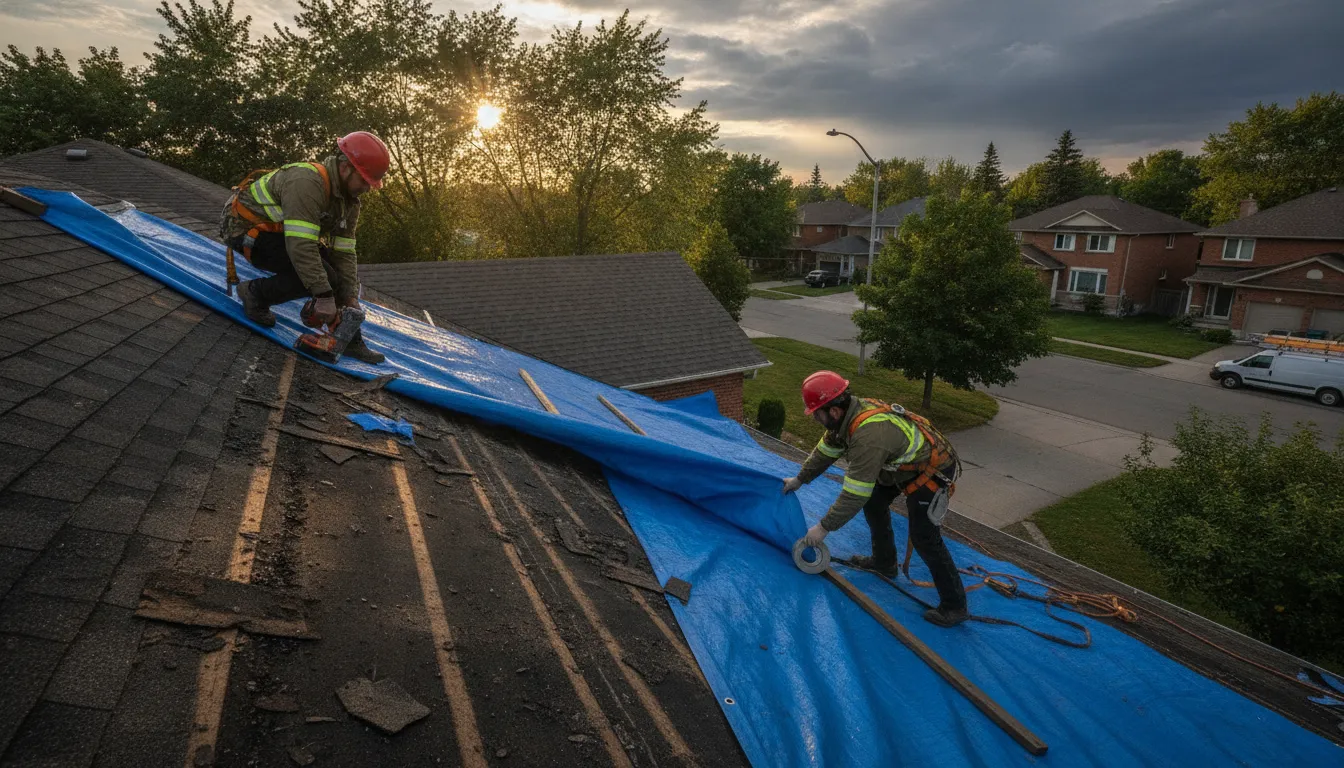
- 1
Emergency tarping and drying
On first visit we installed marine-grade waterproof tarps over the exposed areas using cap nails and wood battens to prevent further water ingress. We also arranged a portable dehumidifier and moisture meter readings to confirm interior drying before removing damaged materials.
- 2
Careful removal and deck inspection
We stripped the damaged shingles and underlayment in affected zones only, removing ridge materials and vent flashings to inspect the plywood deck. Damaged 7/16" OSB/plywood panels were replaced where nail withdrawal or rot was present, and we installed 6d ring-shank nails at the recommended spacing to meet modern fastening guidance.
- 3
Upgraded underlayment and ice & water protection
We applied a self-adhered ice and water shield (synthetic membrane) along eaves and valleys per best practice for Ontario freeze–thaw cycles, followed by a high-temperature synthetic underlayment across the field for improved breathability and tear resistance. This layered approach reduces the chance of membrane failure during severe weather.
- 4
Premium architectural shingle and ventilation work
We installed a laminated architectural shingle rated for high-wind performance, matching the existing colour and profile for a seamless repair. Ridge vents and intake soffit vents were rebalanced to preserve attic airflow; metal flashing and step flashings were sealed with low-modulus butyl-compatible sealant to avoid long-term bonds that can crack.
- 5
Finishing, cleanup and documentation
After completing the work, we conducted a full nail pattern verification, walked the roof with a magnet sweep to remove stray fasteners and removed debris from the property. We provided the homeowner with a repair report including photographs, material specifications and the workmanship warranty language to support an insurance claim.
Frequently Asked Questions
How long does an emergency storm repair like this take?
Most focused repairs on a house this size are completed in one to three days of onsite work, depending on weather and the scope of deck replacement. Emergency tarping and drying are done immediately, with final materials scheduled as soon as conditions allow.
Will the repair disrupt daily life inside the home?
Disruption is usually minimal—our team stages materials carefully, protects landscaping and limits noisy activities to daytime hours. We coordinate access and clean up every evening so the homeowner can remain in the house safely.
How do I know if I need a repair versus a full replacement?
We assess the percentage of the roof affected, the condition of the decking and whether the existing shingles have aged to the point where performance is broadly compromised. When only isolated areas show damage and the remaining roof is in good condition, a scoped repair is often the best value.
Are these repairs code-compliant for the area?
Yes—repairs use materials and fastening patterns aligned with current good practice and local expectations in Durham Region, and we document the work to support any permit or insurance requirements. Major replacements follow the Ontario Building Code; scoped repairs address safety, weatherproofing and structural integrity.
If a spring storm has left your Clarington home exposed
We provide prompt, documented repairs across Clarington and the surrounding Durham Region—skilled, design-conscious tradespeople who care about finish and longevity.
Get a Free Quote